
Hinweis: Ein aufschlussreicher (Propaganda-)Film der DARPA (Defense Advanced Research Projects Agency)
Author:
2007 Urban Challenge Finals

Bild: kwc
Urban Grand Challenge – Nov 2007 – Victorville CA

cfarivar – Flickr
-
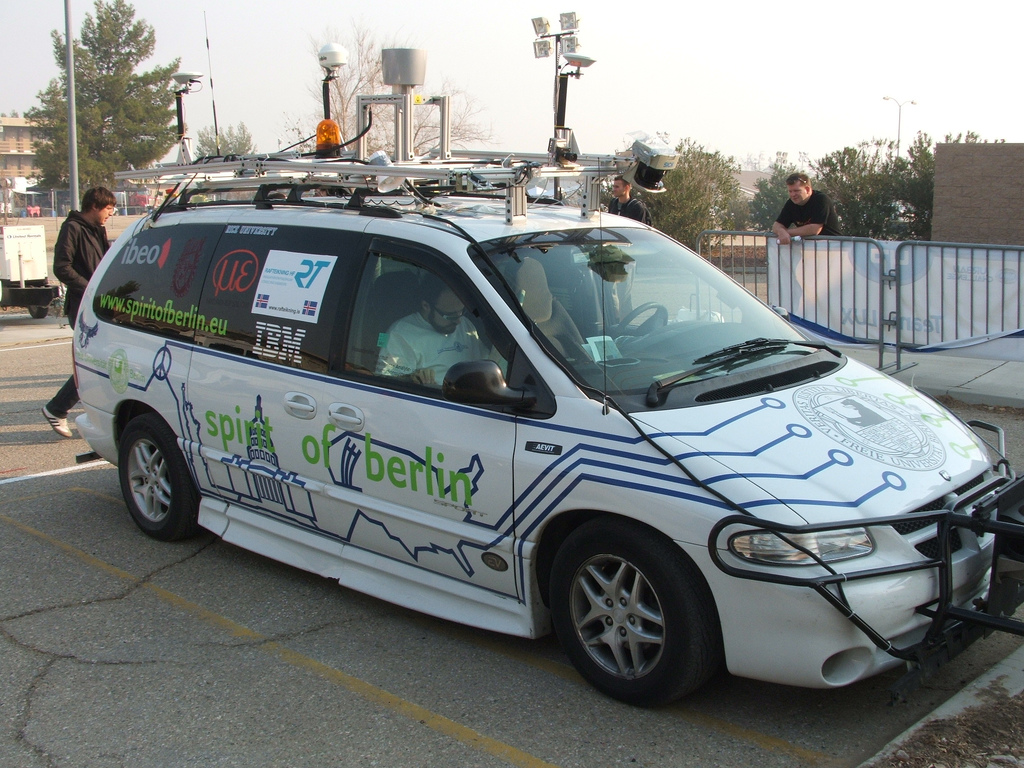
- Team Berlin’s Van, Victorville
-
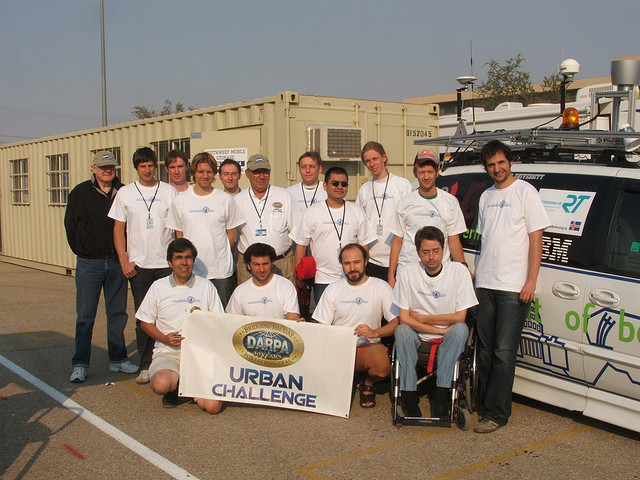
- Team Berlin Photo, Victorville
-
- Team AnnieWay, Victorville
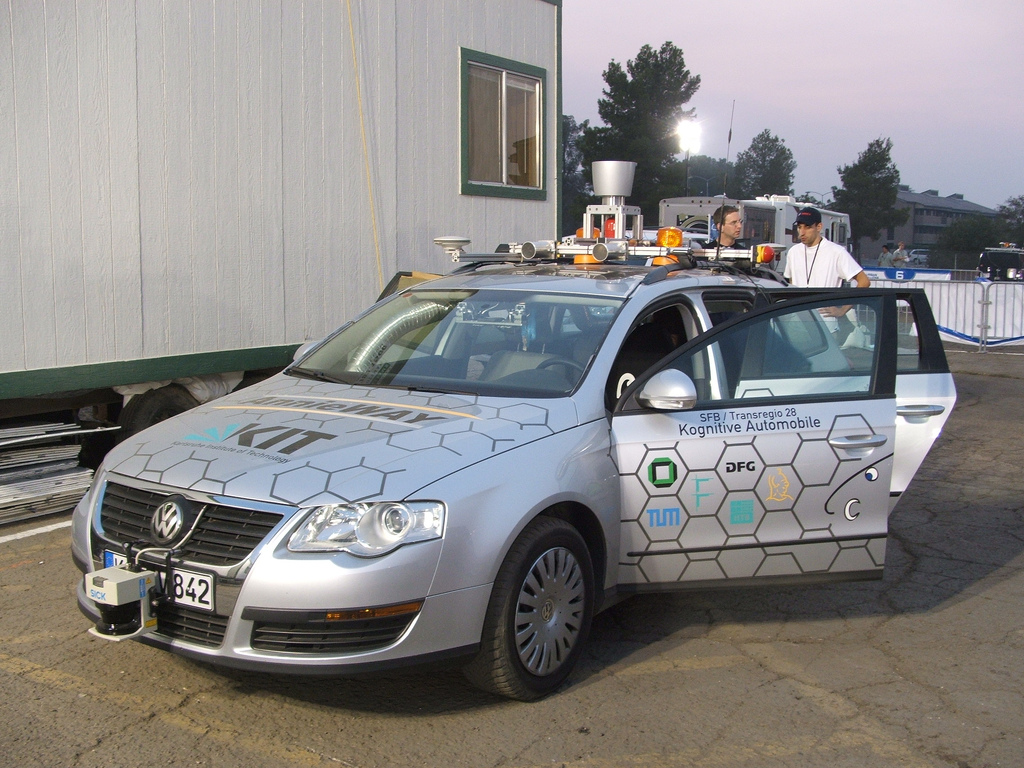
-
- Team AnnieWay, Victorville (2)
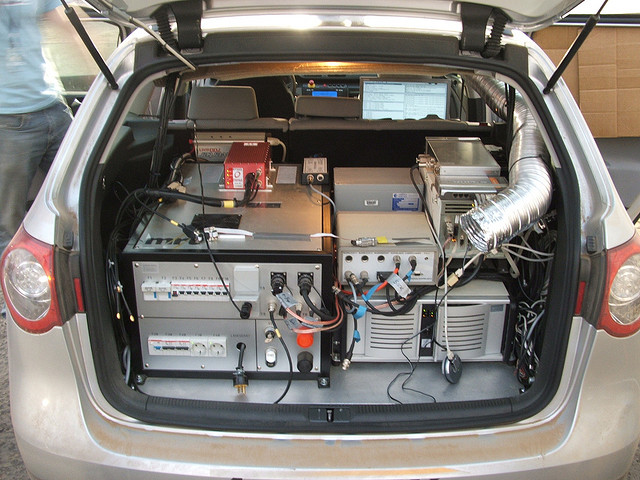
Bild: cfarivar
NASA Center for Climate Simulation Debuts 2
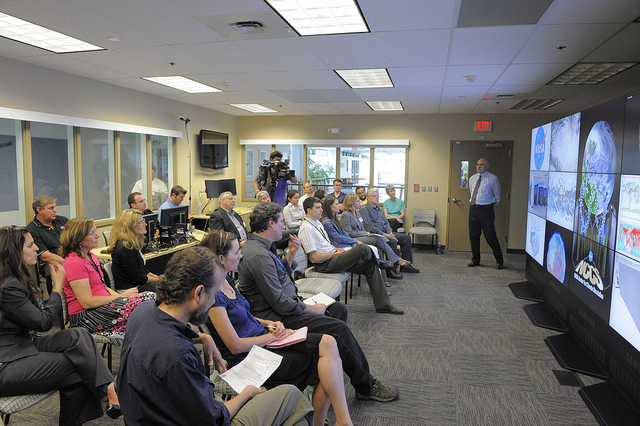
NASA Center for Climate Simulation Debuts
The NCCS media day was attended by members of the media and NCCS partners from industry and government. Dr. Phil Webster (right, center) addresses the audience.
To learn more go to: www.nasa.gov/topics/earth/features/climate-sim-center.html
Credit: NASA/GSFC/Pat Izzo
NASA Goddard Space Flight Center is home to the nation’s largest organization of combined scientists, engineers and technologists that build spacecraft, instruments and new technology to study the Earth, the sun, our solar system, and the universe.
NASA Center for Climate Simulation Debuts 3
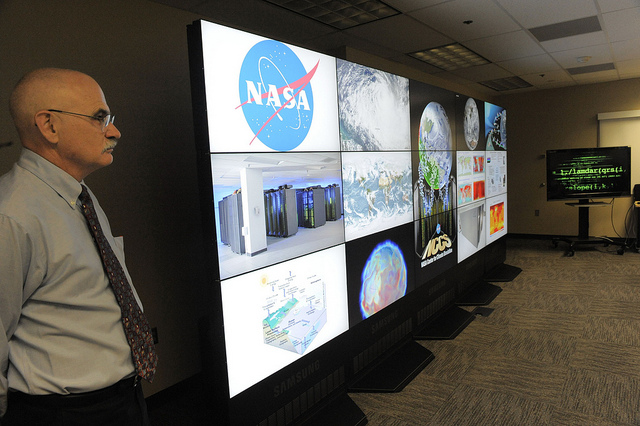
NASA Center for Climate Simulation Debuts
The cornerstone of the NASA Center for Climate Simulation is its 15-screen visualization wall. Dr. Phil Webster (left) presents a variety of visuals on the wall.
To learn more go to: www.nasa.gov/topics/earth/features/climate-sim-center.html
Credit: NASA/GSFC/Pat Izzo
NASA Goddard Space Flight Center is home to the nation’s largest organization of combined scientists, engineers and technologists that build spacecraft, instruments and new technology to study the Earth, the sun, our solar system, and the universe.
Buzz Aldrin Steps Onto Moon (NASA, July 20, 1969)

The crowning achievement for the Saturn V rocket came when it launched Apollo 11 astronauts, Neil Armstrong, Edwin (Buzz) Aldrin, and Michael Collins, to the Moon in July 1969. In this photograph, astronaut Aldrin takes his first step onto the surface of the moon.
Image credit: NASA
Buglugs – Flickr
-

- NASA Endeavour – 2

-

- NASA Endeavour – 3

Bild: Buglugs
NASA
NASA Tweetup with TJ Creamer

NASA astronaut TJ Creamer talks about his experience in space during a "Tweetup" at NASA Headquarters, Thursday, July 29, 2010, in Washington. Creamer, who spent 161 days living aboard the International Space Station as part of the Expedition 22/23 crew, set up the orbiting outpost's live Internet connection and posted updates about the mission to his Twitter account, sending the first live tweet from orbit. Photo Credit: (NASA/Paul E. Alers)
Bild: nasa hq photo
Sun and Solar Magnetism (NASA, 3/15/10)

Solar Magnetism
Global Hawk, NASA’s New Remote-Controlled Plane
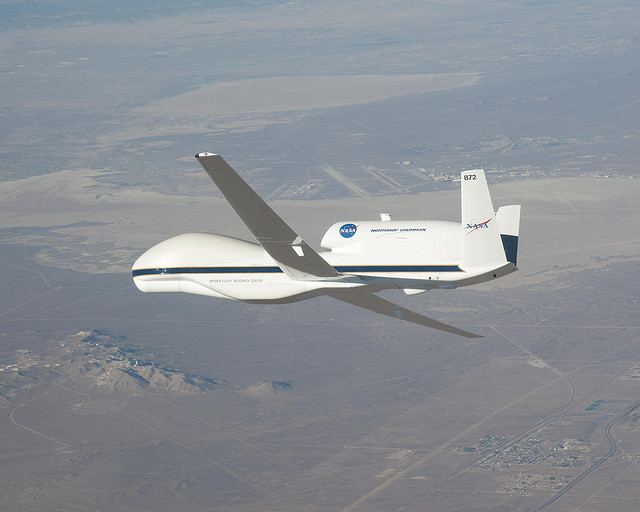
At NASA’s Dryden Research Center in California, a group of engineers, scientists, and aviation technicians have set up camp in a noisy, chilly hangar on Edwards Air Force base. For the past two weeks, they have been working to mount equipment—from HD video cameras to ozone sensors—onto NASA’s Global Hawk, a remote-controlled airplane that can fly for up to 30 hours at altitudes up to 65,000 feet.
The team is gearing up for the Global Hawk Pacific campaign, a series of four or five scientific research flights that will take the Global Hawk over the Pacific Ocean and Arctic regions. The 44-foot-long aircraft, with its comically large nose and 116-foot wingspan is pictured in the photograph above, banking for landing over Rogers Dry Lake in California at the end of a test flight on October 23, 2009. The long wings carry the plane’s fuel, and the bulbous nose is one of the payload bays, which house the science instruments.
For the Global Hawk Pacific campaign, the robotic aircraft will carry ten science instruments that will sample the chemical composition of air in the troposphere (the atmospheric layer closest to Earth) and the stratosphere (the layer above the troposphere). The mission will also observe clouds and aerosol particles in the troposphere. The primary purpose of the mission is to collect observations that can be used to check the accuracy of simultaneous observations collected by NASA’s Aura satellite.
Co-lead scientist Paul Newman from Goddard Space Flight Center is writing about the ground-breaking mission for the Earth Observatory’s Notes from the Field blog.
NASA Photograph by Carla Thomas.
Stephen Hawking NASA 50th

Dr. Stephen Hawking, a professor of mathematics at the University of Cambridge, delivers a speech entitled "Why we should go into space" during a lecture that is part of a series honoring NASA's 50th Anniversary, Monday, April 21, 2008, at George Washington University's Morton Auditorium in Washington. Photo Credit: (NASA/Paul E. Alers)
Bild: nasa hq photo
Earth and International Space Station (NASA, 04/17/10)
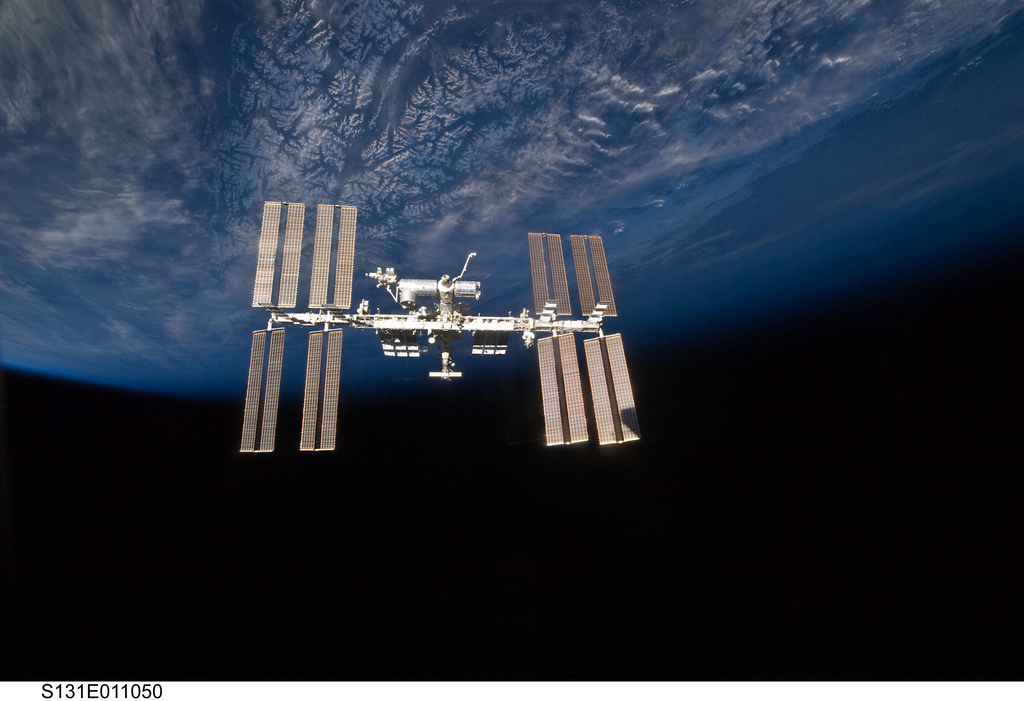
Backdropped by Earth's horizon and the blackness of space, the International Space Station is featured in this image photographed by an STS-131 crew member on space shuttle Discovery after the station and shuttle began their post-undocking relative separation. Undocking of the two spacecraft occurred at 7:52 a.m. (CDT) on April 17, 2010.
Image/caption credit: NASA
NASA faked Shuttle picture!
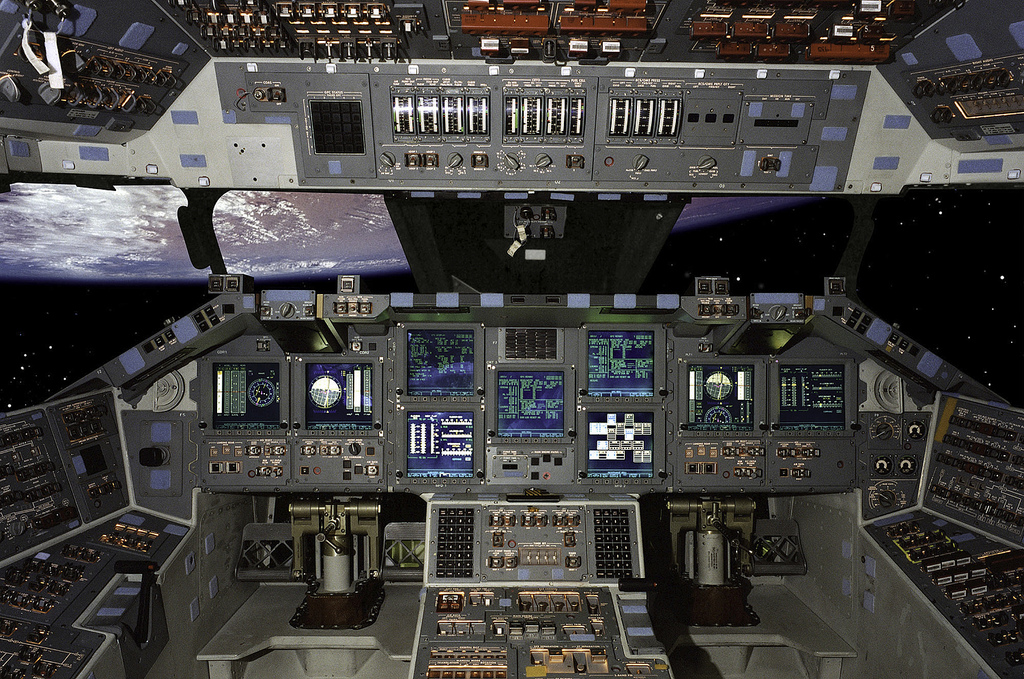
Bild: thebadastronomer
NASA’s new learning initiative unveiled
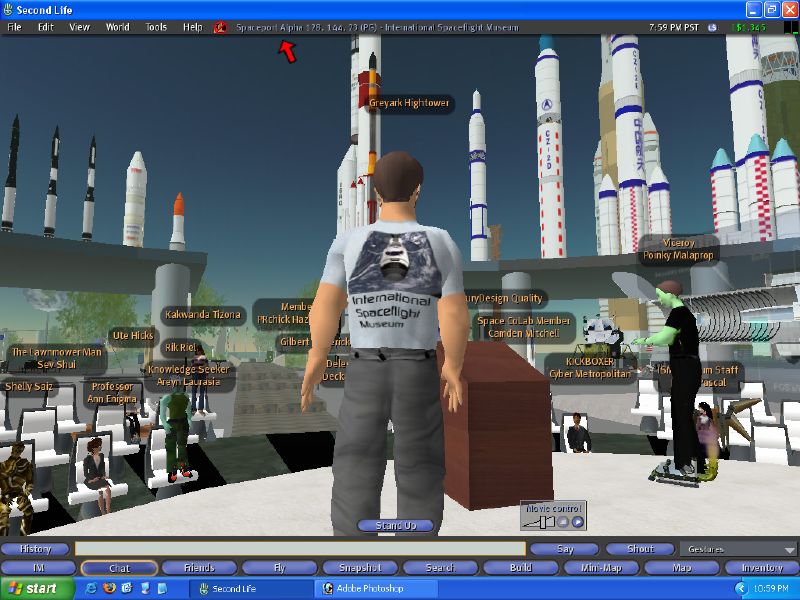
Tonight's presenter, NASA's Daniel Laughlin (aka Greyark Hightower in Second Life).
Bild: janet.powell
NASA STEREO Captures Huge Eruptive Prominence 304 April13
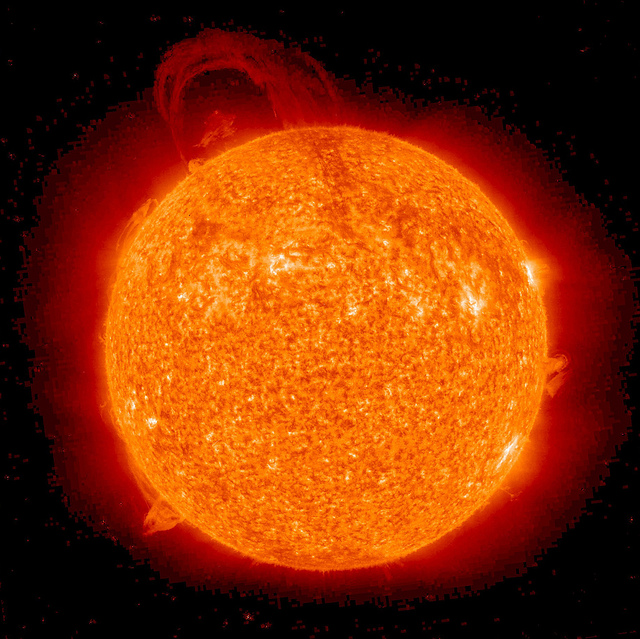
The STEREO (Ahead) spacecraft caught this spectacular eruptive prominence in extreme UV light as it blasted away from the Sun (Apr. 12-13, 2010). This was certainly among the largest prominence eruptions seen by either the STEREO or SOHO missions. The length of the prominence appears to stretch almost halfway across the sun, about 500,000 miles. Prominences are cooler clouds of plasma that hover above the Sun’s surface, tethered by magnetic forces. They are notoriously unstable and commonly erupt as this one did in a dramatic fashion. The video clip shows about 19 hours of activity.
To learn more or donwload the high res files go to: stereo.gsfc.nasa.gov/gallery/item.php?id=selects&iid=122
NASA Goddard Space Flight Center is home to the nation's largest organization of combined scientists, engineers and technologists that build spacecraft, instruments and new technology to study the Earth, the sun, our solar system, and the universe.
Ein Video dieser Protuberanzen gibt’s unter www.flickr.com/photos/gsfc/4526619234/