U.S. Pacific Fleet – Flickr

U.S. Pacific Fleet – Flickr

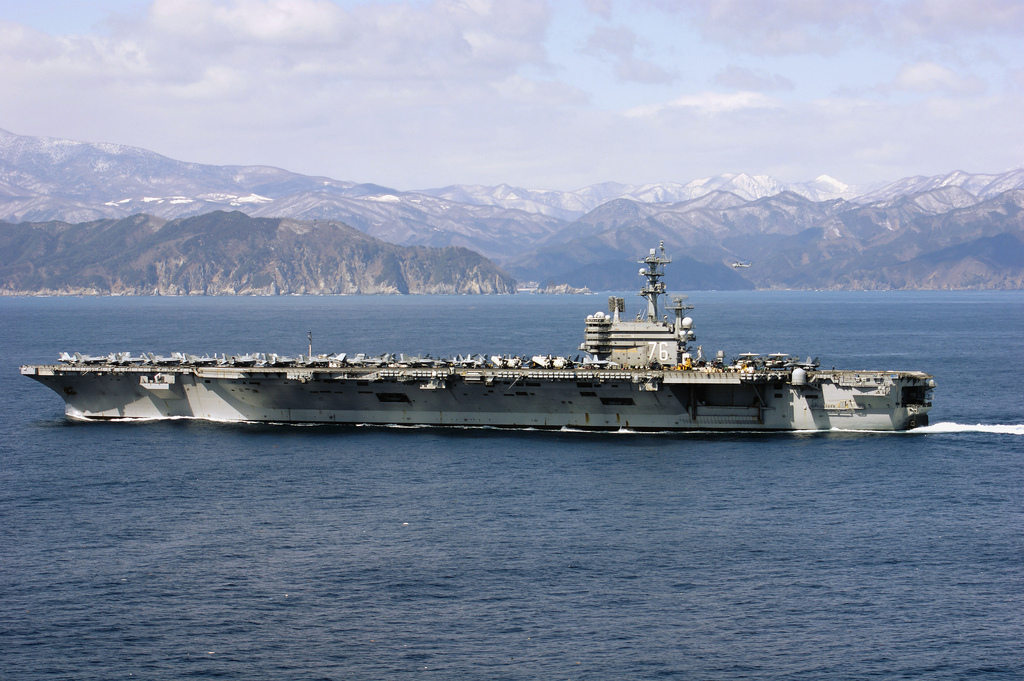
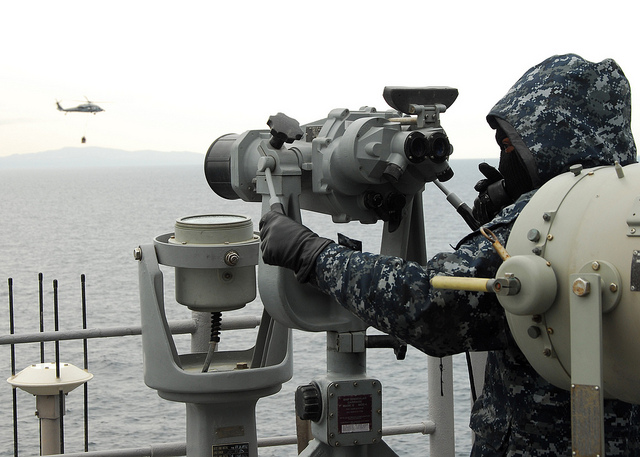
Ship’s Serviceman Seaman Kevin Broom stands the forward lookout watch

PACIFIC OCEAN (March 21, 2011) - Ship's Serviceman Seaman Kevin Broom stands the forward lookout watch aboard the forward-deployed amphibious assault ship USS Essex (LHD 2) during a vertical replenishment at sea with USNS Matthew Perry (T-AKE 9). Essex, USS Harpers Ferry (LSD 49) and USS Germantown (LSD 42) with the embarked 31st Marine Expeditionary Unit are currently operating off the coast of Hachinohe in northeastern Japan in support of Operation Tomodachi. (U.S. Navy photo by Mass Communication Specialist 2nd Class Eva-Marie Ramsaran/released)

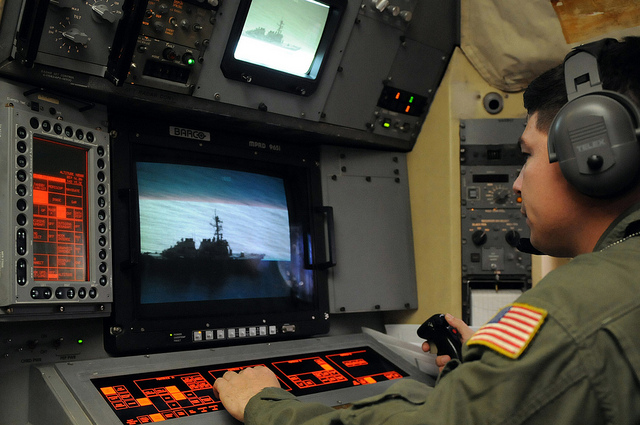
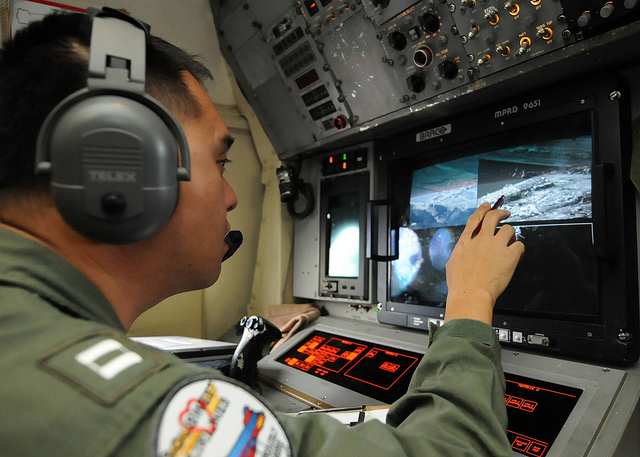
The advanced imaging multi-spectrum sensor on board a P-3 aircraft

NORTHERN JAPAN (March 22, 2011) The advanced imaging multi-spectrum sensor on board a P-3 aircraft, from Patrol Squadron 4 (VP 4), displays a damaged highway overpass near a northern-Japanese port. With the squadron’s communication and real-time capabilities, the Navy will gain more knowledge of where it can provide vital humanitarian and relief support to tsunami stricken areas of Japan. VP 4 has recently repositioned to Naval Air Facility Misawa in support of Operation Tomodachi. (U.S. Navy photo by Mass Communication Specialist 2nd Class Devon Dow/Released)

U.S. Pacific Fleet – Flickr

Essay: Sprit für die Welt – SPIEGEL ONLINE – Nachrichten – Wissenschaft

Essay: Sprit für die Welt – SPIEGEL ONLINE – Nachrichten – Wissenschaft

Autos, nicht Menschen verbrauchen den größten Teil des Getreides, das 2006 im Vergleich zum Vorjahr zusätzlich verarbeitet wurde. Das US-Landwirtschaftsministerium schätzt, dass der weltweite Maisverbrauch 2006 um etwa 20 Millionen Tonnen über dem Vorjahr lag. Davon wurden vermutlich 14 Millionen Tonnen zur Herstellung von Ethanol verwendet, nur 6 Millionen Tonnen dienen der Produktion von Nahrungsmitteln. Insgesamt hat sich die Getreidemenge, die zu Ethanol verarbeitet wird, in fünf Jahren verdreifacht, von 18 Millionen Tonnen in 2001 auf geschätzte 55 Millionen Tonnen im vergangenen Jahr.

Der Appetit der Welt auf Treibstoff ist unersättlich. Das Getreide, das nötig ist, um den 120 Liter fassenden Tank eines Geländewagens mit Ethanol zu füllen, reicht aus, um einen Menschen ein Jahr lang zu ernähren. Von der Menge, die destilliert werden muss, wenn der Tank alle zwei Wochen gefüllt wird, könnten sich 26 Leute ein Jahr lang satt essen.

Quelle: Essay: Sprit für die Welt – SPIEGEL ONLINE – Nachrichten – Wissenschaft

Am 26.März 2011, um 20.30 Uhr, ist WWF Earth Hour – zum fünften Mal seit 2007. In über 100 Ländern schalten Millionen Menschen für 60 Minuten das Licht aus, um mehr Klimaschutz und eine sichere Energiezukunft für Mensch und Natur zu fordern. (www.earthhour2011.de)
SPIEGEL ONLINE – Nachrichten

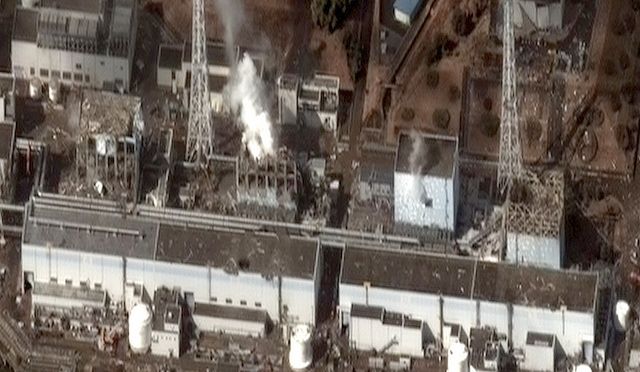
Bild: FlickrCC / DigitalGlobe-Imagery

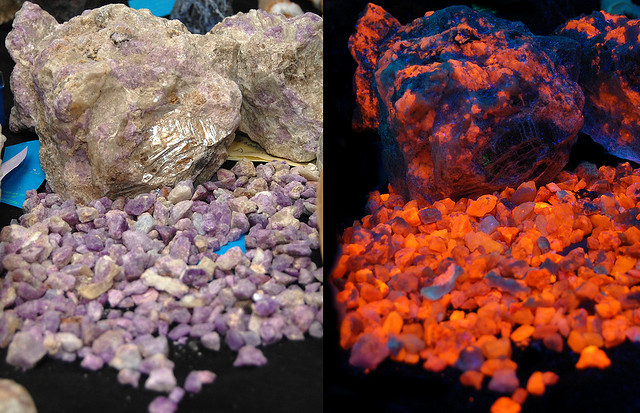
Hackmanite

Sar-E-Sang, Mines of Lapis, Badaskan Province, Afghanistan This is one of the brightest fluorecing minerals in my collection. The image on the right is under longwave UV light. The colors are true, and if anything the picture understates how bright this stuff lights up.

A Media Intervention for Wikileaks San Francisco part of Jan 15 global day of action 40

"Since its release of about 2000 diplomatic cables (as of January 7th, 2011), Wikileaks has been subject to extraordinary pressures, seemingly at the behest of the US government. Amazon and EveryDNS have denied Wikileaks internet service and Visa, Mastercard, Paypal, and Bank of America have been prevented supporters from donating money to Wikileaks. This is despite the fact that Wikileaks has not even been charged with a crime. Unfortunately, the situation has gotten even worse. The press has been spreading lies about Wikileaks. Mainstream media outlets do not appear to be doing even the most rudimentary fact-checking. The most blatant of these lies is the idea that Wikileaks has “indiscriminately dumped 250,000 cables on the internet”. This is flat-out false. A few news organizations, including NPR and InformationWeek, have corrected this mistake, and NPR has even offered an apology. By contrast, most news organizations ranging from the AP to the Wall Street Journal continue to print this falsehood. We call upon all news organizations to correct previous articles and statements, to issue apologies to their readers, and to take steps to prevent this mistake from occurring in any future articles and shows. We will be protesting outside the TransAmerica pyramid, across from a San Francisco office of the New York Times, on Saturday, January 15th, at 4pm. On that day, we will be joining in protesting against the repression of Wikileaks with many others around the world, including Washington, DC, and several cities in Canada and Australia. To counter the New York Times’s censorship of reality, we plan to publish the released cables on the walls of their building. In addition, participants will be provided cable printouts and markers and encouraged to throw down their artistic abilities by adding a graphic representation of their favorite cable to the Cablegate Coloring Book.

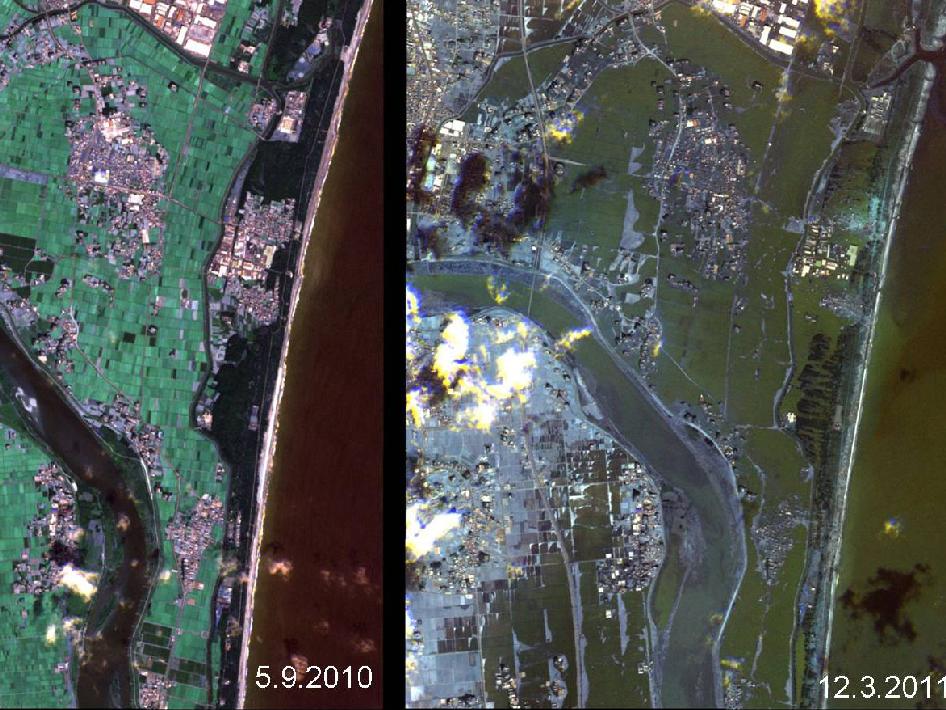
Japan’s Coastline Before and After the Tsunami

These images show the effects of the tsunami on Japan's coastline. The image on the left was taken on Sept. 5, 2010; the image on the right was taken on March 12, 2011, one day after an earthquake and resulting tsunami struck the island nation.
NASA